

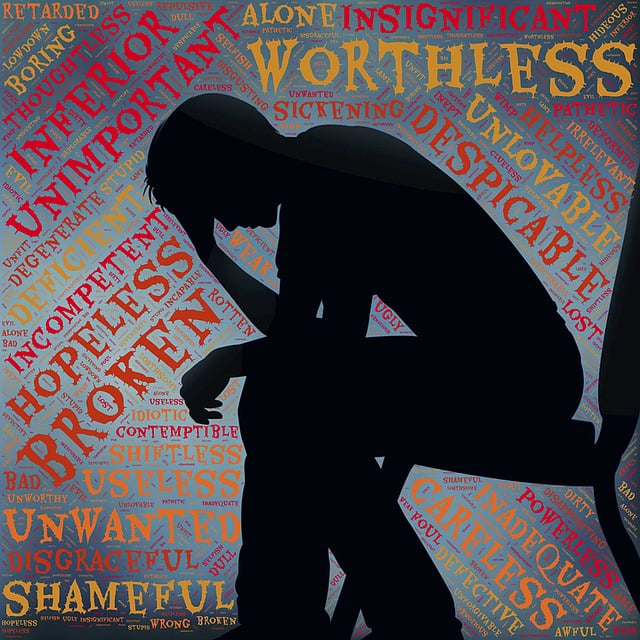
Today, I want to talk about a subject that is rarely mentioned, and that is the subject of being overly self-absorbed, detailing the effect it can have on your mental health and other negative consequences. If there was one thing that helped my mental well-being and sense of freedom more than anything else, it was ending this destructive habit.
What does it mean to be self-absorbed? If you spend most of your day obsessing over your mental and emotional state or continually worrying about how others are perceiving you, then you are overly self-absorbed.
Negative Effects of Being Self-Absorbed
- You are never present towards life or others
- A decline in mental health
- Feeling stuck in your head
- Mental Exhaustion
- Obsessive rumination
- Struggle to build and maintain friendships/relationships
- Depression/experiencing no joy in life
- Developing hyperawareness issues
- A feeling of detachment from your surroundings
What causes us to be so self-absorbed?
Poor self-esteem can lead to self-absorption, as individuals with low self-esteem often question themselves or worry about how others perceive them. It can also be a byproduct of those obsessed with self-help as they continually strive to improve themselves. More commonly, though, it is driven by people troubled by uncomfortable thoughts and feelings, so they become obsessed with trying to manage and fix their inner world. Unfortunately, the natural approach towards fixing things in the outside world can often have the opposite effect when directed towards our inner world.
Why does this approach make things worse?
Firstly, narrowing your focus towards an uncomfortable feeling only increases the discomfort. Also, as you direct your attention inward, you become distracted, which prevents you from being present towards life and others. So many anxiety sufferers tell me how they feel disconnected from the world around them and how they struggle to follow conversations when in social situations.
We need to understand that awareness and focus are two different things. Awareness encompasses all your surroundings; it is free, open, and always active, even when you sleep, which is why you can remember your dreams. Focus occurs when you take that awareness and direct it towards a specific area. Because you can only focus on one particular thing at a time, you lose the ability to be fully present towards life and with others.
This is why self-absorbed people struggle to build meaningful friendships and relationships, as they take little interest in the needs and wants of others, focusing instead on themselves, their issues, problems, and feelings. If you have ever been in the company of someone who is self-absorbed, you may find they are there in front of you but are barely listening to what you are saying.
Obsessing over your inner world wears you out mentally
It takes a huge amount of mental energy to constantly worry and obsess over how you are feeling while trying to figure a way out of it all. This is the reason self-absorbed people often feel mentally drained and worn out, and why their mental health suffers.
You find yourself constantly stuck in your head.
Constant internal monitoring, otherwise known as chronic introspection, can lead to feeling stuck inside your head. You have spent so much time obsessing over how you feel and what you can do to be free that you can no longer think of anything else but yourself. In some cases, this can lead to hyperawareness issues where you are overly aware of your thoughts and emotions and struggle to connect with or be part of the outside world.
It can lead to depressive states
As people become more entrenched in this behaviour, it can lead to many depressive states. People sometimes wonder if depression leads to being self-absorbed or if being self-absorbed leads to depression. In my experience, I would say it is the latter. I had never been depressed in my life until I entered into toxic self-absorption. It drained me of every bit of energy I had. I eventually ran on empty while still obsessing each day over how I felt and what I could do to fix it, leading me further and further away from a solution.
It can lead to isolation
Being self-absorbed can eventually lead to isolating ourselves from people and the things we once enjoyed. This is mainly due to having very little energy to deal with outside events, finding it draining and difficult to be around others. This was true for me, but I also found that I no longer enjoyed anything. Everything I did felt like a chore. Unfortunately, as I found, the more we isolate ourselves, the more time we have to ruminate about our situation, creating a vicious cycle.
It leads to resistance towards feelings
The main reason people focus obsessively on how they feel is driven by the desire to change their current state. The natural response to uncomfortable feelings is to want to suppress them or get rid of them, but this very action of resistance only increases your suffering, as you are rejecting what is and why trying to feel better never works.
To be free of an uncomfortable feeling, then, you have to be willing to feel it; otherwise, it just gets stuffed back down only to return later. Instead of turning away from your suffering, try turning towards it, allowing it to be fully present without trying to get rid of it or modify it in any way. This very action ends the resistance towards it and allows it to free itself from your inner space. Also, the more you allow your mind and body to do as they wish, the less time you spend obsessing over it all, and you begin to become more outward than inward.
The bottom line is that there are no positive effects from falling into this toxic habit. Also, as I found, it becomes a terrible cycle as the more you fall into self-absorption, the worse you feel, and the worse you feel, the more you do it, and so the misery continues. This is why so many people become stuck for years, wondering why nothing is working, and why they continue searching for a way out while obsessively evaluating themselves and how they feel.

The realisation that finally helped me break free
In my book “At Last a Life”, I mentioned seeing a counsellor when I first suffered, who said to me, ‘You won’t get better until you stop trying to get better’. When I first heard this, I presumed he was crazy and thought that if I didn’t try to get better, then how could I ever do so?. But eventually, as time passed, I understood what he truly meant.
His words finally hit when I was standing in a café waiting to get served, and while doing so, I was once again obsessing about how bad I felt, searching in my mind for that silver bullet that would make my suffering go away. I was so self-absorbed that I barely noticed anyone else around me. It then hit me; I felt so detached because I was constantly monitoring myself while being stuck in my head, searching for a way out. I then looked around the café and saw people chatting away while being fully engaged in what they were doing. I saw that these people weren’t doing what I was doing, and that is why they felt so much better and were far more present than I was.
This realisation that I was doing this to myself had never been more obvious to me! I then remembered my counsellor’s words and now truly understood what he meant. I was so self-absorbed because I felt so bad, yet feeling bad was driving more self-absorption, leading me to feel worse, and so it was a continuous cycle. To escape this, what if I just allowed myself to feel like I did without constantly obsessing over it all and mentally trying to figure a way out?
How would this approach work out?
Well, as it happened, it worked very well indeed. I still felt pretty bad due to what I had done to myself previously, but so much of the suffering fell away, and I began to feel far more present as I gave up obsessing over myself. Whatever happened going forward, I knew I had seen the cause of so much of my suffering that day. I had finally broken a cycle that had kept me stuck for so long.
How could I ever feel better while doing the very thing that was making me feel so bad? I couldn’t believe that I hadn’t seen this before. This is what true ‘Aha’ moments are like. It’s beyond understanding, and it’s so completely obvious you can’t believe you missed it. So, he was right. “You won’t get better until you stop trying to get better” Trying to fix myself was the problem all along. The more I tried to solve myself, the more broken I became.
Trying to get out of something instead of allowing it to be part of you only leads to more obsessing over how you feel. It puts your focus back on you and invites more introspection and rumination in, the very things that keep the condition going.

Get out of your head and engage with life
I once spoke with someone who had been advised by his counsellor to watch every negative thought, catch it and then try and replace it with a positive one. When he came to me after a few weeks of trying this, he was in a terrible state, as all he had been doing all day was staring inwardly, trying to catch and replace these thoughts.
I explained to him that being free of the influence of negative thoughts was a process of learning to disengage with them by seeing them as unimportant and not personal. It was never about trying to replace them or continually observing them. This approach only gave them more importance and created so much extra mental work. It had not only exhausted him mentally, but now his attention was stuck inwardly. This is why he felt disengaged from life and was so psychologically messed up. It didn’t take long for him to see the issue, stop following the advice he had been given and become free of what he had created.
I also once spoke to a lady who was obsessed with self-improvement for many years until one day, her mother said, “You spend all your life buried in books, going on retreats, or downloading the latest course, and where has it got you? Just accept yourself for who you are and go live your life instead of obsessing about yourself all the time”.
She said that it hit her instantly that she hadn’t been living her life at all, as her obsession with improving herself had taken over. She stated that it seeped into everything she did as she was constantly evaluating herself, how she felt, how she should act and how she was coming across to others. She admitted it had worn her out, made more of a mess of her and that nothing felt authentic or spontaneous anymore.
The day she saw this, she said she felt free for the first time in years. Instead of spending all her time trying to fix herself or get somewhere, she now had more time for her hobbies, friends and family. She felt far more mentally refreshed and alive as she no longer wasted energy obsessing over herself. Her interactions felt far more spontaneous as she no longer worried about them. She finished by saying, “I was looking for the answer to feel better when, all along, the only thing I needed to do was to stop trying to fix myself or perfect some version of myself I thought I should be.”
I related to this story as I was also stuck in trying to fix myself for years. When I gave up and just allowed myself to feel how I did and got on with life regardless, things changed dramatically. People hear the word surrender as the path to freedom, but very few people truly understand what it means. My surrender came when I had a deep realisation that my suffering was due to me trying to escape how I felt; my complete non-acceptance towards how I was feeling was only leading to more suffering. Maybe I had to go through this never-ending war with myself and finally hit a brick wall before this became obvious to me.
During this time, I would ask myself questions like:
How could it ever be possible to manipulate yourself into a natural state? Would that not happen if you left yourself alone? How can being at war with yourself ever lead to being at peace? How can you ever be spontaneous when you are trying to live your life through a bunch of techniques or understandings? If you stopped trying to figure anything out, would the mental exhaustion not lift? If you just went back to living your life instead of obsessing over how you feel, would your brain start thinking of other things and allow you to feel more present? I would ask these questions and more, and eventually, it became obvious to me that I was the cause of my suffering and the cycles I had created. I realised that to feel better, I had to stop trying to feel better.
At first, this seemed too simple. How could I ever feel better if I stopped trying to feel better? This is when the therapist’s words once again came back to me. Trying to fix myself was the reason for so much of my suffering, so the obvious answer to feeling better was to give it all up.
Now, I am not saying there should be no move towards self-improvement. I still had certain issues I needed to work through after most of my anxiety had left me. Going through what I did robbed me of my self-confidence, and I wasn’t great socially, but now I approached these issues differently. It was now about identifying the root cause of my problems and addressing them. This approach did not involve constant monitoring of my inner state. It was no longer about inner manipulation or trying to mentally fix myself. It was about educating myself on the cause and making changes there, while at the same time getting on with my life.
So, there is nothing wrong with personal growth when done correctly; however, when it consumes your entire day, leading to constant self-evaluation, perpetual mulling over your problems, and an obsessive inward focus in an attempt to fix yourself, this is not personal growth; this is rumination and can lead to numerous negative consequences.
Tips on how to overcome being so self-obsessed
- Know that you are human. We all have flaws and different personality traits. Learn to be more accepting of who you are rather than always trying to improve yourself or live up to someone else’s expectations.
- Stop trying to manipulate a different state. Allow yourself to feel the way you do, and it will pass in its own time. The less concern you put into your inner world, the more outward-looking you will become.
- Practice self-care. Creating more positive feelings reduces self-absorption, and the better you feel about yourself, the less you care what others think.
- Live your life. Take up new hobbies or go for a walk. This automatically redirects your attention elsewhere and helps you to become more outward than inward.
- Cease the need to constantly evaluate yourself. Learn to pay attention to what’s around you rather than obsessing over how you feel.
- Don’t isolate yourself. This will only increase rumination due to the lack of outside stimulation.
- If you are obsessed with the self-help industry and rely on it to herd you around, then let go of this obsession and leave the subject of fixing yourself behind you. You’re not here to spend your life trying to fix yourself; you’re here to live and engage with life.
- Give yourself time and be patient as you move forward with new behaviours and habits.
- Finally, learn to let go of your chronic self-observation and realise what it is doing to you. It is not productive; it will not lead to any solution and will only create more suffering.
Not everyone who suffers from anxiety becomes so self-obsessed, but those who do will recognise themselves above. The process is about living less in your head, weaning yourself off being overly concerned about all things personal, and engaging more with the outside world. It is about learning to let go of all those self-obsessed habits that were creating the very suffering you were trying to escape from.
I hope this helps you to break out of the cycle. Once again, it takes time to break old habits and develop new ones, so be patient with yourself.

My book At Last a Life has sold over 200,000 copies worldwide and tells the story of how I recovered from 10 years of anxiety and panic.
If you’re tired of trying endless techniques and just want your life back, At Last a Life explains the understanding and approach that helped me fully recover and has helped countless others do the same.
Get the eBook instantly, or order the physical paperback directly through my secure shop. 👉 Order Direct from My Shop
You can also find the Kindle edition and paperback on Amazon and read the great reviews. 👉 Order on Amazon
Prefer the audiobook? 🎧 Now Available on Audible

- How core beliefs shape your experience of life - 5th January 2026
- Learning how to deal with difficult emotions - 30th September 2025
- What does it mean to surrender? - 13th February 2025



Thank you soo much .such a wonderful read it’s absolutely me
Thanks Paul, great article !
What an amazing blog – you have described me to a t!!!! I’m guessing we all think our personal anxiety is more difficult to solve… but at the root it’s about the self obsession… I think I may have had my aha moment – time to throw away the self help books… and engage with life…. Thanks 🙏
Ooh lordy this is me to a T.
First thought was so HOW do I stop this ? 🤣🤣
This is just what I needed right now. Amazing post Paul.
Thank you.
Thank you Paul. I work night shifts and I live alone. My work pattern is such that I often have just one night off between two night shifts and sleep during the day so my life can be very isolating. I try to deal with this by socialising as much as I can during my time off and when I can’t see anyone I try to watch comedies and listen to engaging podcasts to keep me compnay and feel less alone.
I think a blog about depression is very helpful because so many of us, who have been stuck either in a very long period of anxiety or trapped in a cycle of seemingly never ending setbacks do go on to develop depressive elements to our suffering. At times the feelings are so oppressively dark, bleak and gloomy it feels like the depression is outperforming the original anxiety! Its tempting to think once that happens that everything has become much more serious and that it will be harder to recover, or that acceptance “won’t work” for depression.
But I also know that I do not experience that oppressive sense of nightmarish darkness when I haven’t been suffering with anxiety and I know that it eventually passes. Depression has not been an illness that has featured in my life when I have been well and not anxious so I know they go hand in hand. What we are talking about here essentially, is an emotion, or mental state that is unpleasant and undesriable. They are pretty much the same. I see so many searches online of people asking “does acceptance work for depression?” Or “is depression permanent unlike anxiety?” So I know lots of people are confused and nervous about this. Depression can feel even more deep set, immovable and frightening than anxiety. But its so inevitable that a stressed out, over worked brain will produce feelings of darkness and gloom. It shouldn’t be a surprise.
One of the things that help in this regard is definitely contact with positive, upbeat, or at least calm people. It really does focus your attention outward and you stop squirming in discomfort or worrying about how you feel. You stop over thinking because you are engaged in conversation. Really focusing on what they’re saying and trying to keep up with events in their lives, what’s happeneing to them, what they are worried about, or celebrating their successes, etc trains your brain to look outwards. After a while you begin to forget you are unwell. So much of this illness is about “remembering” you are unwell and being stuck on thought loops. The feelings can often fade when you forget to keep remembering you are unwell, so to speak.
My last lingering issue is bad dreams and nightmares. I often have bad dreams towards the end of my sleep and feel a huge surge of difficult to explain kind of intense distress, accompanied by dark gloom in the dream, and this often persists for a few hours after I wake up. I know the period of bad dreaming and morning distress is temporary but its proving to be very stubborn. Probably because I am impatient, waiting for it to go and become depsondent when it persists. This is creating an obsession and training my brain to focus on it more, as something important, therefore producing more of it.
“What you resist persists” as the saying goes. I think Claire Weekes advice to “never despair at the amount of time lost to anxiety and the years you’ve been suffering” is essential, because I think as people are recovering this sense of “I’ve never been ill this long before” or “I should have more more progress by now” can become a real source of angst and worry. I really miss deep, dreamless sleep and waking up feeling relaxed and OK. I just need to patiently allow the depression and know that all the “progress” is made during the darkest moments, not when you are feeling ok. If you can be ok with not being ok then that is a bigger stride than having a “good” day.
Thank you! What a wonderful comment. You put it perfectly and eloquently.Described my situation so well.
Its those early morning dreams which make me dread going to bed at night. I sleep, dreamlessly, for about 5 hours, then KABOOM!
Haven’t decided what to do for those remaining hours of vivid thoughts, nightmares. Getting up seems hard as I’m tired and it’s cold. But I guess it’s better than the torment of being in bed.
Paul David is my hero, now YOU are too.
Any chance you could take those bad dreams and nightmares and do something fun with them? LIke maybe start writing a short story or a book about them. It would help change your relationship with those bad dreams. An anticipation for “I wonder what will happen next when I fall asleep???”.
I had terrible insomnia and a deep fear towards it. Lying in bed and I would feel the fear just increasing after each passing minute. Along with acceptance towards this condition I started to approach it with an attitude of “If I can’t sleep, then that’s fine. I’ll use that extra time to read some books I was wanting to read.”
There were nights that as I was going to bed I was actually hoping that it would be a “troubled night” and would therefore allow me to read or maybe play a video game. But those nights I started falling right to sleep with little issue at all.
Along with acceptance, my relationship to that obstacle in my life was flipped on its head.
It’s just a thought. Turn that distressing dream/nightmare content into a book or a short story, maybe a youtube/tik tok channel or podcast where you just detail the happenings in the dream. Maybe you try to find links between different dreams. Keep a fun attitude with it, not meant to be an overbearing chore. Like a kid on an adventure. I think in time you’ll lose that fear towards the potential of a bad dream and the dreams will evaporate.
Thank you Paul, I definitely recognise myself in your words .
Now reading your 2nd book, they have been a huge help, a way to go but life is getting back to “normal”
Thank you
Paul I’ve been in this state for four years everything you say in the above applies to me my main issue is DPDR none of my memories feel real at all my past life doesnt feel real at all which causes me constant panic attacks I get racing images and memories coming in all the time and I pine incessantly for all the wonderful things I used to feel how do I overcome that ? I get so distressed about not feeling love and joy and happiness that I’m stuck in a loop
I read your blog last night – being stuck in a really dark despair for so long – and I can’t express how you described what I’m experiencing so accurately. I try and try and try to feel better and sink deeper into a despair that things will never change and your words showed me so clearly what I am doing to myself and how destructive it is. It’s so persistent it now feels like my immune system has turned in on myself and is destroying me. Your point about depression is illuminating – I’ve always thought my deep depressions cause my self lacerating thoughts but reading this I realise that it may be the other way round. I remember decades ago questioning my drinking – assuming that my depression caused my drinking issues and suddenly asking myself the reverse – could my drinking be causing my depression. Within a week I’d stopped for good. I recognise that suffering has become so habitual it’s as automatic as an addiction. It’s helpful to recognise that and challenge it like I did my drinking.
Thankyou – reading this was a lightbulb moment for me and I hope I can tackle with as mu ch determination as my other addictions. You’ve given me something very precious. Thanks again
“Let the thought in, pay it no attention. Give it space and time and let it run alongside your day.”
– Can someone explain this to me? i feel like this is the only symptom i have. How can i observe a thought but give it no attention? Sometimes i’m looking for an hour on my mind & trying to actively observe them & give them space but then i think that’s it too much attention..sometimes i’m just focusing on my work and i don’t even notice them. Any tips?
AK – No one said, to observe it. By observing it you are giving it attention. The sentence says to allow its presence, hence don’t try to get rid of it. It will pass on its own if you don’t make it important or put any belief into it. The last sentence you say is perfect, you get on with your work and you don’t even notice them, you aren’t putting any importance into them, just getting on with your day. The worst thing you can do is spend time actively observing them; it serves no purpose.
Why is it that when I read articles that make so much sense and gives me some hope I feel more calm and feel determined to get through this, then as soon as I come away from the article, WHAM…. I get all the dread and start inward thinking and obsessing all over again. It’s like I can’t seem to grasp this and it is wearing me down so much. I’ve got through this before Paul back in 2012 but this time I seem to be getting worse and don’t see any way out.
The fact you are trying to get out is the issue, Simon
The inward thinking and obsessing is a sign this is what you are trying to do
Don’t try to get out of anything, if you feel dread then allow yourself to feel dread, even if your mind wants to obsess then allow it to obsess but don’t join in with it.
Reading an article is not going to rid you of anything, you may feel some hope and sense of peace reading it, but that doesn’t eliminate your suffering, that will still be there under the surface, ready to reveal itself again. Then you get worried, annoyed and disheartened again.
Anything you read should never be used as a tool to get rid of how you feel as this is the opposite of allowing, it should only deepen your resolve to allow yourself to feel how you do. Reading your comment it is clear you are doing the former, trying to find some words or a technique to stop you from feeling the way you do.
Do the opposite and fall right into where you are without obsessing over trying to feel different, without looking for some escape from it all. Trying to get out of it is the reason you are suffering; this is what leads to resistance, overthinking, obsessing, worrying, and so you continue to suffer. When I finally surrendered to how I felt I still felt rotten, anxious and detached for a while after; it’s not a free pass out of it all, it just ends the loop you find yourself in so a process of healing can occur, for this, you need to be patient.
Thanks you Paul for your responce and understanding – it is very much appreciated
Hello everyone,
I have read both of Paul’s books and have a few questions regarding his wisdom – which I find incredibly helpful and accurate.
However, there are some things that I am really struggling to accept. My main symptoms are mental exhaustion, overthinking, being highly aware of my thoughts, and sleep issues. However, I have noticed, as Paul says, that these don’t matter, and I should just allow myself to feel the way I do – I can’t change it anyway, so I might as well live my life regardless.
There are, however, some situations where I struggle to do this.
I live a “normal” life and work full-time. However, I really struggle to concentrate, and every single day when I go to work, it feels like my brain is so exhausted that it wants me to go home and rest, as it can’t handle working. When I feel this way for 7.5 hours every day, I tend to start worrying again, and the vicious cycle continues. I haven’t taken sick leave from work because I don’t feel stressed due to my tasks, but the fact that I feel this way when I’m there – which is hard to endure for such long periods. I try to tell myself that it’s natural in the moment, and that it is just how it is, and to just keep going – but it’s incredibly difficult for me to keep staying in it, and then i start becoming aware of my thought and feelings and start to get involved, obess and worry which starts to make me feel very hopeless and sad that i won’t ever be able to live a normal life again, where anxiety isn’t a topic.
In this regard, I would like to know if anyone has had the same experience, and what one should do – should I take sick leave, or should I keep working despite feeling this way and being mentally exhausted?
Paul – As someone who gone through anxiety with your books and blog (btw I remember older posts were way more “raw” in a good sense), I actually think im regards to AK that if a thought with am emergtic charge comes, and anxious thought are designed to be in the front, “observing it” is like pressing play on its healing, itll intensify maybe, youll feel its painful charge but thats how itll lose its weight.
Maybe for people who are lost its better to allow while doing things, but I feel like honestly if you have a negative emotional movement and you just sit and allow it without distracting yourself (if you dont have to) then its a more focused burning of that energy.
Vadim, putting your focus on something only increases its power, the same as if you focus on any pain within your body, your focus has the power to amplify the pain. The same as focusing on your anxiety all day doesn’t weaken it, it only increases it.
Focusing on negative thoughts only gives them more power; it also deems that thought important, so it will continue to repeat itself within the brain.
Say you have a negative thought about being ‘Worthless’ focusing on that thought will only make it appear more real, more worthy of your attention while stopping you from being present. When you allow the thought and even the emotion of being worthless without identifying with it as the truth, it will naturally fall away as it is not sustained by your belief/interest and focus. Negative thoughts are not worthy of your attention/belief, the only way you feel the emotional hit to a thought is when you put belief into it.
I had many negative thoughts when I suffered from social anxiety like “I’m not interesting enough”, “I’m not as good as other people”. Focusing on these thoughts or not focusing on these thoughts would have made no difference to me overcoming them if I did not understand that these thoughts held no truth whatsoever. When I put belief into them I turned into a people pleaser and felt inferior around others, which was the whole cause of my social anxiety.
When you realise that they hold no truth and are just old repetitive thoughts of no importance, then you naturally focus on them less as they are no longer deemed important or worthy of your attention. Without this belief/attention, they had nothing to sustain them and so they fell away naturally.
It’s not about trying to perfect some technique or mind strategy here to be free of negative thinking; it’s about understanding the nature of negative thoughts and how little attention they really deserve.
I can have the odd negative thought now like everyone else but the difference is I pay them no mind, not as a technique but just a simple observation that they are of no importance, within a short period of time the thought has passed as my focus didn’t hold onto it or deem it relevant.
To finish I don’t mean turn away from a negative thought as a form of distraction, it’s fine to observe its presence, observing it helped me see it as unimportant, observing and focusing are two different things, I can observe I have toothache without feeling the need to focus on it.