

What are negative core beliefs, and how are they formed?
Core beliefs influence how we view ourselves, the world, and others and are mainly shaped by our upbringing, relationships and life experiences. We are not born with beliefs; they are learned over time. Hence, those who grew up in a loving environment will generally have a more positive sense of self and outlook on life than those who grew up in an unloving or toxic environment.
The core beliefs we hold about ourselves can have a considerable influence on our actions, thoughts, self-image, relationships and how we feel psychologically and emotionally, and act as a lens through which we view the world and shape our reality. This is why two people can be in the same situation, yet act and feel completely different. When we are able to change our negative core beliefs, the way we think, act and experience life will also change.
The trouble is that negative-held beliefs about oneself, when left unchallenged, can reinforce themselves, and so we end up feeling like this is who we truly are.
So, the person who feels unworthy may enter into a bad relationship, believing they don’t deserve better and that no one else would want them. They are then treated poorly once again, reinforcing the belief that they are unworthy of genuine love, which in turn leads to further low self-esteem and poor future choices.
The person who lacks self-esteem may turn to people-pleasing behaviours to seek outside validation, only for others to back away because of their needy behaviour and lack of authenticity. This then reinforces their belief that others don’t want to be around them and that they have nothing to offer.
The person who feels unlovable may enter into a relationship and become extremely jealous as they try to hold on to it, always fearing their partner will leave. They may question the other person every time they go out, fearing they will meet someone else, or need constant reassurance that they are loved, which only makes them increasingly needy and clingy, ultimately driving the other person away, reinforcing the belief that they are indeed unlovable.
A negative held belief not only controls our behaviour but also shapes our emotional state, as our emotions are closely tied to our thoughts. So the person who has a recurring thought that they are unlovable will experience the emotions that accompany it. They may feel emotions like shame, depression, anger and a lack of self-worth. This is why core beliefs feel so factual: the person not only has negative thoughts about themselves, but also the accompanying emotions.
The person who doesn’t hold negative beliefs about themselves and has a more solid sense of self cares little for outside approval, as they have it within. They care far less about what others think, so they are more able to be their authentic self. As they experience fewer negative emotions, they are less likely to isolate themselves or turn to food, substances or alcohol in an attempt to cope, leading to a healthier and more sociable life. As they view experiences more positively, they tend to experience less negativity and conflict in their lives.
Here is an example of how two people can interpret and experience an event in entirely different ways, based on the core beliefs they hold.
The person who feels unlovable and insecure receives a call from their partner that they have to work late and may instantly jump to the conclusion that they are likely having an affair with someone in the office, and so feels angry, powerless and jealous. Their behaviour may include false accusations of infidelity, followed by relentless messages asking when they are coming home, resulting in an argument when the person finally returns.
The person who does not hold negative beliefs may feel sorry that their partner has to work longer and message them not to worry, and that they will prepare dinner when they get home. There are no feelings of anger, resentment, or jealousy, and no battleground when they arrive home.
Another example could be that the person who holds the belief that no one cares about them arranges a night out, only to receive a last-minute message that their friend can’t attend because their child is sick. Because of this, they may feel the person is only making excuses to avoid spending time with them, which leads to feelings of anger and inferiority. They may vow not to ask them in future and be off with them in their return message, accusing them of not wanting to go in the first place.
The person who does not hold these beliefs is more likely to feel disappointed, but their primary concern is for their friend and their sick child; they message back saying not to worry, we will catch up another time.
As you can see, it is not the event that causes the emotional suffering and conflict, but the false beliefs they hold about themselves that do. Also, when someone has certain negative beliefs, they tend to look for confirmation to support them, even when it isn’t there. A message left unreturned by someone who’s busy or a work colleague who doesn’t say hello because they have a lot on their mind can be interpreted as the person being upset with them, when, in reality, there was a perfectly innocent and reasonable explanation. They may also be prone to dismissing genuine positive feedback from others, as it does not align with their core beliefs.
Now I am not saying that people should feel guilty or judge themselves negatively for reacting this way, as I was certainly guilty of it when I held negative beliefs about myself. I am writing them down so people may recognise themselves in them and understand what is driving their behaviour and shaping much of their suffering and enjoyment of life. To help them return to their authentic self, a place we all yearn for.
Common negative beliefs
- I am unlovable
- I am not attractive
- People cannot be trusted
- I never do anything right
- People don’t like me
- I have nothing interesting to say
- I am a failure
- Every partner will cheat on me
- There is something wrong with me
- I am different and feel like I don’t belong
- Nobody cares about me
Common results of holding on to negative beliefs
- Low self-esteem
- Negative thinking
- Isolation
- Pessimistic view of the world and others
- Lack of enjoyment in life
- Anger and conflict
- Highly sensitive to criticism
- Avoidant behaviours
- Turning to food, alcohol, and substances in an attempt to cope
- Overthinking/worrying
- Struggling socially
- Reduced motivation
So, how do we begin to see through these core beliefs we hold?
The first step is to recognise that you are holding onto negative beliefs about yourself. You can do this by checking in with your automatic thoughts, emotions, and behaviours, and try to find the core belief that is driving them. The second stage is to trace back to where these core beliefs were formed. Was there a specific person or experience that made you think this way about yourself? The third stage would be to begin challenging these beliefs through logical reasoning, so you no longer continue to believe and support them.
Change, though, is not always easy, as these beliefs can be deep-seated and unconscious, and when held for so long, can feel fixed and solid. This is why someone who feels unlovable struggles to accept a compliment, as it does not align with how they view themselves. They may believe the other person doesn’t really know them or that they are lying or being insincere, and that they will soon be found out. What they don’t see is that the other person does see them as they truly are; it is the person believing these false beliefs about themselves who doesn’t see themselves as they truly are.
We need to realise that no one is better or worse than anyone else; we have just been programmed to believe so through our past experiences. Put two children up for adoption and place them with two different families, one loving and nurturing and the other that shows no love and support. Which child would grow up with self-esteem, and which would not? Is it the child’s fault that they now have a false negative self-image, or the result of outside influences? It is important to understand that if you were treated negatively or shown a lack of love or support, the problem was not with you but the person who treated you this way. Just seeing this can shine a light on how these beliefs were formed and how they are not a true representation of who you are.
How I was able to overcome social anxiety by bringing to light the core beliefs I held.
Before I suffered from anxiety, my self-esteem was pretty solid. I had no problems socially and did not feel inferior in any way. Unfortunately, as my anxiety got worse and I struggled to cope with life, my confidence eroded. I became more irritable and distant, and began isolating myself. As a result, I wasn’t always pleasant to be around and lost a couple of friendships and a long-term relationship.
Rather than seeing this as a result of what I was going through, I turned it inward and concluded that I must be the reason I was losing the people I cared about, and that I wasn’t worthy of their love and attention. Because of this, I tried harder to hold on to those who were left and tried to impress anyone new who entered my life.
For the first time in my life, I became a people pleaser; I would say yes when I meant no, I never held an opinion for fear it would upset someone else, and I became highly sensitive to any criticism. Rather than being relaxed around others and natural, I became anxious, observing how I was coming across, watching for any signs of disapproval, then going home and going over how things went. Because of this, I could see people backing away, so I tried harder to gain their approval, which only made them back away further.
It was at this point that I knew something had gone wrong and that things had to change. So I began to look at what was causing me to act this way, and after a lot of soul searching, I realised that a shift in the beliefs I held about myself (due to what I had gone through) was driving me to act this way. I felt that others were viewing me the way I viewed myself, and so this was what needed to change.
I then wrote down the beliefs I held about myself.
The list I came up with was
I have nothing interesting to say
People find me boring
People don’t like me
I am not as good as others
I would then ask questions as to why I would please people.
The answers I came up with were
‘Because I want people to like me’
‘Why do you want people to like you?’,’ Because I don’t like myself and require outside acceptance’
‘Do you really believe this is the answer?’, ‘No, people don’t like people pleasers, and I hate myself even more for doing this and always feel inauthentic’
‘Where did this feeling of no longer liking yourself come from?’, ‘From my experience with anxiety and the struggles I had being around others’
‘So, is this person really you?’, ‘No, what I went through stripped my confidence; it is who I think I am, not who I truly am’
Once I shone a torch on these beliefs and questioned them, it made sense why I was acting the way I was and why people were backing away. I also now had an insight into how they were formed and was able to see how false they were, no matter how real they seemed in the moment.
I then asked myself what qualities I liked in people. I concluded that I liked authentic people who had expressed their own opinions and stayed true to themselves. That was the person I was before, and so I wanted that person back. The only way for that person to come back was to shed the false beliefs I now held about myself.
So, the first step was to acknowledge that these beliefs were present for now, but to refrain from acting on them. I would ditch all the people-pleasing tendencies and go back to having my own opinions, even if this felt uncomfortable at first.
Secondly, as I had figured out how these beliefs were created, I would no longer put faith in them. So if they did continue to arise through my past belief in them, I would observe them as just a product of my past struggle with anxiety. These thoughts could be there, but they no longer made me believe they were factual. I would do the same with any emotional reaction that arose, dismissing it as the truth and seeing it as connected to the current belief operating within me.
Finally, I had to ignore the conditioned voice formed through holding on to these false beliefs. This voice would narrate my experience of life, saying things like, ‘Don’t go there, you will feel uncomfortable, ‘They aren’t interested in what you say,’ ‘They don’t like you.’ As I began to let this voice continue without interest or belief, it faded. In fact, if it told me not to do something, I would go against it and would do it anyway. I decided that the best way to move forward was to go against my old conditioned ways of thinking and behaving, to no longer be a servant to my recently created beliefs.
So, it was not about trying to get rid of old beliefs. It was about bringing them into the open and no longer investing belief and energy into them while no longer acting through them as if they were factual. In doing this, they would have no fuel to continue, as I was no longer reinforcing them, and the real me, the one that was always there underneath, would shine through once again.
There were times prior to this when I would act in ways that made no sense to me, but I felt helpless. I now know that it was my subconscious mind running the show, while my conscious/rational mind was the one confused about why I was acting the way I did. The more the real me (my awareness) saw through the false me (the thoughts/beliefs I took to be true) and the less I acted through them, the more they began to fall away, along with the accompanying emotions.
In time and with a lot of persistence, the real me began to resurface, and the false me that I no longer supported fell further away. I was then more able to live the life I wanted and no longer sought validation outside of myself. As a result, there was far less suffering, conflict, overthinking, and worrying. When talking with others, there was far less anxiety and no longer an agenda. This made conversations more enjoyable and authentic, and so my friendships and relationships improved dramatically. All my old ways of dealing with how I felt, like isolating myself, drinking or eating to excess, also fell away, and so I became much healthier, mentally and physically.
It was at this point that I began to see how other people’s beliefs were formed by their own past experiences and then reinforced, and it now made sense to me why so many people struggle, act and feel the way they do. Another upside to seeing this is that you no longer take others’ actions or words personally, which creates far less conflict in your life. The saying ‘Forgive them for they know not what they do’ emphasises this point; rather than attack back, you now have sympathy for them. Not only that, but I was also able to forgive myself for the way I used to behave.
Why positive affirmations often don’t work
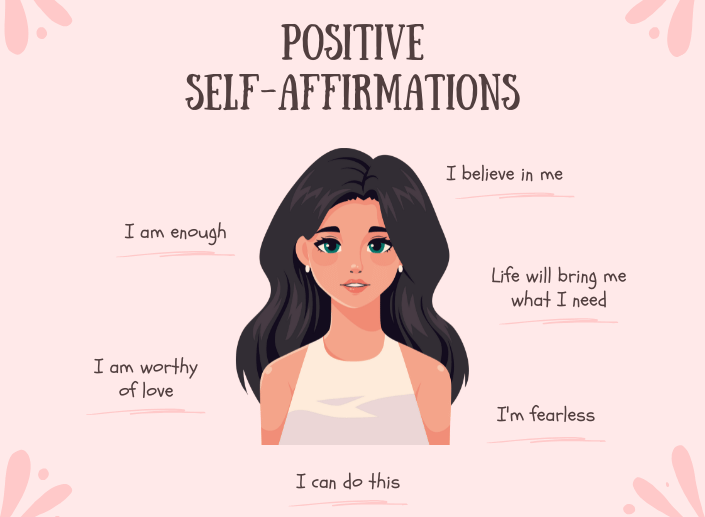
There is a lot of advice about positive self-talk and repeating positive affirmations to boost self-esteem. You may see people posting memes on Facebook, and someone replying that this is just what they needed today. Now, I am not saying there is anything wrong with this, and it is certainly better than talking to yourself negatively, which only perpetuates the negative programming. Still, as people may realise, it has a minimal or short-term effect, and it is not long before the person is filled with self-doubt once again. The reason they have little effect is that they are not dealing with the real issue, and that is to release yourself from the core belief that is driving you to feel and act this way in the first place, while the unconscious belief is still there and driving your thoughts, emotions and behaviours, then repeating an affirmation alone will have minimal effect.
Repeating an affirmation is more of a sign that you are putting belief into the thoughts around how you view yourself; otherwise, you wouldn’t need to repeat it in the first place. So rather than repeating an affirmation in an attempt to feel better, you would be better saying to yourself, ‘I can now see the core belief that is driving me to feel and act this way; it is not the real me and is in no way factual,’ and begin to question it with things like, “Where did this belief come from?’, ‘Is it really true or something I just took to be true?’ Again, there is nothing wrong with positive self-talk, and I am all for it, as long as you are aware of the negative beliefs running in the background and willing to make a change there also.
When affirmations can be helpful
Affirmations can be powerful when used alongside addressing the underlying issues, but they must be framed honestly.
If low self-esteem stems from past relationship choices, simply telling yourself “I am worthy” may feel untrue and even frustrating. Instead, you could say:
“I am not feeling great about myself right now, but I am willing to work on how I view myself and make healthier choices in my relationships.”
This acknowledges your current reality while opening a path for growth and using your past as a learning experience.
If you often feel angry and tell yourself, “People can take me as they find me,” the root cause of your anger remains unresolved. A more constructive affirmation might be: “I am willing to take responsibility for my reactions and work on resolving the issues behind my anger so I respond in a healthier way.”
This shifts focus from passive acceptance to active self-improvement, helping you reclaim a sense of control.
These reframed affirmations do three things: they validate your current feelings, keep you honest with yourself, and create actionable steps toward positive change.
Here are some additional examples you can use or adapt:
- “I am not feeling confident in myself right now, but I am open to learning how to value myself more and make choices that reflect that.”
- “I feel nervous in this situation, but I am willing to take small steps and notice that I can cope and learn from it.”
- “I am noticing my anger, and I am willing to understand what is driving it and respond in a healthier way.”
- “I may be critical of myself at times, but I am choosing to treat myself with kindness and patience as I grow.”
- “I have made mistakes in the past, and I am willing to learn from them and build healthier connections moving forward.”
- “I don’t have all the answers yet, but I am willing to take responsibility for my actions and keep improving myself each day.”
By approaching affirmations this way, they become tools that support meaningful growth, rather than quick-fix phrases. They help you retrain your mind while staying grounded in reality, reinforcing the process of changing your core beliefs and emotional patterns.
Core beliefs are nothing more than a thought taken to be true
If you come across the word ego in a spiritual text, this is what it is: a bunch of conditioned thoughts and emotions you take to be who you are. When they talk about awakening, they are not talking about some spiritual experience; they are talking about waking up to who you truly are and seeing reality as it truly is. Seeing your life through negative beliefs is like putting on purple glasses; everything then appears purple. Take the glasses off, and you will see yourself and reality as it truly is.
See it like this: if your computer is corrupted with a virus, it will not perform as it should. When we think about it, the computer has not changed at all; it has just picked up some faulty programming that is preventing it from working to its full potential. See the false beliefs you have gathered from the outside as the same thing, just some faulty programming you took to be true that is stopping you from seeing and being who you truly are. All you are doing is removing that faulty programming so you can return to your true self.
One way I was able to speed up this process of seeing through these beliefs was to observe them in others. I would see someone become defensive over an insignificant comment and realise that they most likely had low self-esteem and that their defensive stance was a way to protect themselves from perceived criticism. I would see someone brag about material things or be prone to exaggerating the truth, and observe that they most likely have beliefs about not being as good as others.
The reason I did this was that it is much easier to see in others than in ourselves, because we do not have the accompanying thoughts or emotions they have, and so it feels far more real to them than to the one observing it. Once I was able to observe it in others, then it was easier to see what was driving my own behaviour and emotional state. By doing this, my understanding and insight into how it all worked became much clearer.
Sometimes we need actions as well as the ability to see through them
To change core beliefs, sometimes we need actions to accompany what we have seen. When I suffered from anxiety, I went out of my way to avoid feeling uncomfortable. This led to a lot of avoidance of life, and when I did try to venture out, I would feel incredibly anxious and feel the need to rush home. As time went by, I came to believe the outside was a scary place to engage with, so I hid away.
The more I did this, the more I reinforced this belief, and so I would make every excuse under the sun not to go anywhere. Once I began to question things, I realised that the world was not a scary place to engage with, as most other people were fine engaging with life and that my continued avoidance had only reinforced this belief in my brain, and so, as a way of protecting me, it was always on high alert to keep me safe.
Now, just seeing this would not free me from my self-inflicted prison; I knew that to overcome this belief, I had to teach my brain that it was false by reengaging with life once again. I knew that, initially, my fear response would still go along with this belief, so I would still feel anxious and apprehensive for a while until my brain’s wiring changed.
So again, I would have to go against this belief and its reactions. When my anxious state returned, I would dismiss this as the truth of me being in real danger and bypass all the thoughts that told me not to go to certain places. To change this belief, I had to go against my conditioned voice and emotional reaction and live the life I wanted. Again, over time, this belief began to fall away, as did the conditioned voice and the emotional reaction to it, and I was free to live the life I wanted.
I also know someone who was pretty confident when their marriage suddenly broke down, and they lost their home and were reduced to weekend visits with their children. Due to this, they started to drink heavily at home, put on loads of weight and began to isolate themselves. With the perceived rejection and weight gain, you could see their confidence decline, and their beliefs about themselves began to change. Then, all of a sudden, after hitting rock bottom, they decided to make positive changes in their lives. They ditched the drinking, got fit, lost loads of weight, bought a whole new wardrobe, and began joining new social groups. The actions they took changed how they had started to view themselves, and they returned to the person they had been before.
Sometimes, the action we take may involve removing ourselves from a toxic relationship/friendship or environment. If someone is constantly putting you down or mistreating you, it will only reinforce the negative beliefs or image you hold about yourself. Remove yourself if possible so you can have a fresh start and rebuild the confidence someone else has taken away.
These are just a few examples of how we can take practical steps to change the beliefs we have about ourselves; it does not mean that all our insecurities or hang-ups will instantly go away, but we can take small, practical steps to change the way we view ourselves. We can expand our lives in numerous ways to rebuild our confidence. The better we feel, the more likely we are to move forward in other areas of our lives and make more positive changes.
Facts about negative core beliefs
- When believed and left unchallenged, they can create feelings of anxiety, depression, low self-esteem and anger
- Although they feel real and solid, they are not a true representation of who you are; they are covering up who you truly are
- We are not born with the beliefs we hold; they are created through past experiences and how others treated us
- Your emotional state is tied to the beliefs you hold about yourself; when the beliefs change, so does your emotional state
- If we are not living the life we want and missing out on opportunities, then it is highly likely that a negative belief is holding us back
- Once we see through the falseness of the beliefs we hold and how they were created, we can begin to return to our authentic selves
- Even a small shift in the way we view ourselves can have a positive impact on our emotional state and how we experience life
When I look back, I see that a lot of the suffering I experienced around my own negative beliefs was nature’s way of telling me I was believing something to be true that was not and that I was not in line with reality. The journey I took to free myself from these negative beliefs wasn’t easy; it took a lot of soul searching, inner work, a change in behaviours and time. I realised these beliefs weren’t formed overnight, and so they were not going to leave overnight, even when seen through.
There were days when I would feel free of them, and some days they would come back with full force, but I still held the understanding to realise they weren’t who I was, and they held no truth over reality. This gave me the knowledge to act independently of them and no longer allow them to drive my behaviour. The less belief I put in them, and the more I began to live the life I wanted, rather than be run by them, the more they fell away and the freer I became.
When I overcame any form of suffering, it never came through trying to change outside circumstances or through any form of technique or suppression of it. It always came through seeing what was causing the suffering and making changes there. Working on the inside is what changes the outside, as the outside is always a reflection of our inner state.
Not everyone who suffers from anxiety has negative beliefs, but for those who do and recognise themselves in the above, I hope you found this article helpful.

My book At Last a Life has sold over 200,000 copies worldwide and tells the story of how I recovered from 10 years of anxiety and panic.
If you’re tired of trying endless techniques and just want your life back, At Last a Life explains the understanding and approach that helped me fully recover and has helped countless others do the same.
Get the eBook instantly, or order the physical paperback directly through my secure shop. 👉 Order Direct from My Shop
You can also find the Kindle edition and paperback on Amazon and read the great reviews. 👉 Order on Amazon
Prefer the audiobook? 🎧 Now Available on Audible

- How core beliefs shape your experience of life - 5th January 2026
- Learning how to deal with difficult emotions - 30th September 2025
- What does it mean to surrender? - 13th February 2025
Thank you so much Paul always a good read and makes sense to all our suffering.thank yoo once again .take care
Wow! As you hit on, my core beliefs came from a non-nurturing, childhood-trauma background…that I did not have awareness of until age 48. This impacted not only how I viewed myself, others, but also my perception of God. I had serious rejection and abandonment wounds. Overtime, that changed and I am now a reborn Christian. Thank you for writing this.
I am glad you found the article helpful, Monica and I hear from many people that their childhood or toxic relationships they went through had a huge effect on the beliefs they hold. As stated in the article, my experience with anxiety changed a lot of my beliefs about myself, and even when I recovered, I found I wasn’t as confident as I once was and still had certain self-esteem issues, which affected my emotional state and how I was around others. Once I dug into why and was able to see the issue, everything changed for the better. I am glad you were able to move forward and change over time.
Thank you so much Paul I found your books. helped me when I needed it the most .Was lovely to read this and remind myself how far I have come with your help
Hi Paul,
Thanks so much for the post – really helpful. I was just wondering if you had any advice around core beliefs and difficult periods. I’m currently unemployed after completing my masters, getting lots of rejections from jobs, a bit lost about knowing what to do with my career and generally feeling like I’ve made a lot of poor job decisions/mistakes and way behind my peers. I know that this is becoming a bit of a core belief (that I’ve done everything wrong) and I’m constantly comparing myself, but unfortunately I’m finding it difficult to be kinder to myself and challenging this view and as a result I’m feeling very low about my current situation and struggling to see a way forward.
Thanks again for the blog – it came at a great time for me.
Cait
Hello,
My name is Jacob from the USA.
I just finished reading the first book by Paul David. It almost seems like it was written by me.
I am someone who struggles with Anxiety and OCD. My OCD is displayed through covert compulsion (rumination, researching, reassurance).
I loved the first book and just started the second one. Based on his first book, I understand that the “right” move in my journey is to not wish away the worry. However, I do struggle with anxiety relating to death. I continue, even on vacation, to consistently think about my parents dying. It takes me out my entire day. I hurts to think about and it provokes a lot of physical anxiety.
I know my core beliefs and values, but how do you stop feeling anxious about something that is going to happen. I do not want to feel that way (physically or mentally) until that day happens.
Is it as simple as to just live with the possibility that I feel this way forever?
Hi Paul,
Thank you for the much needed topic about the core beliefs.
As mentioned by jmsand9, I still find it hard about intrusive thoughts about the death of myself, parents and family. Their intensity is so high and ruins my day wherever I am. It also stops me from driving the car alone with accident and death images that keep coming.
Should this be considered as intrusive thoughts or something to address with the core belief?
It would be if you could enlighten on this topic and how to approach them would be much beneficial to overcome this.
Nisha
Intrusive thoughts are just thoughts you strengthen by taking their content so seriously; this is why they come with such force, constantly repeat themselves and ruin your day.
You don’t struggle with intrusive thoughts; you struggle with taking your thoughts so seriously instead of seeing them for what they are, nothing but internal noise of no relevance.
How do you do that? You stop giving them interest, you stop identifying with them as the truth, you just go about your day with them present or not. Without your identification and focus, they have far less power over you and begin to wither away as they have no fuel to continue. At the moment, you are doing the opposite; you are taking them so seriously that they are controlling your behaviour, you are giving them an immense amount of focus and respect.
A woman who has overcome them recently said, ‘Paul, I used to take thoughts so seriously; now I just let them come and bounce around for as long as they wish while paying them no mind. Once they realise they are not getting any attention or respect from me, they soon dissolve into nothing’.
People always want to know how to get rid of intrusive thoughts; in doing so, they are saying ‘These are really important’. What they should be saying is ‘I no longer care if they are there or not, they no longer have any influence or power over me’. So it is not if they are there or not, it is your response to them that is important.